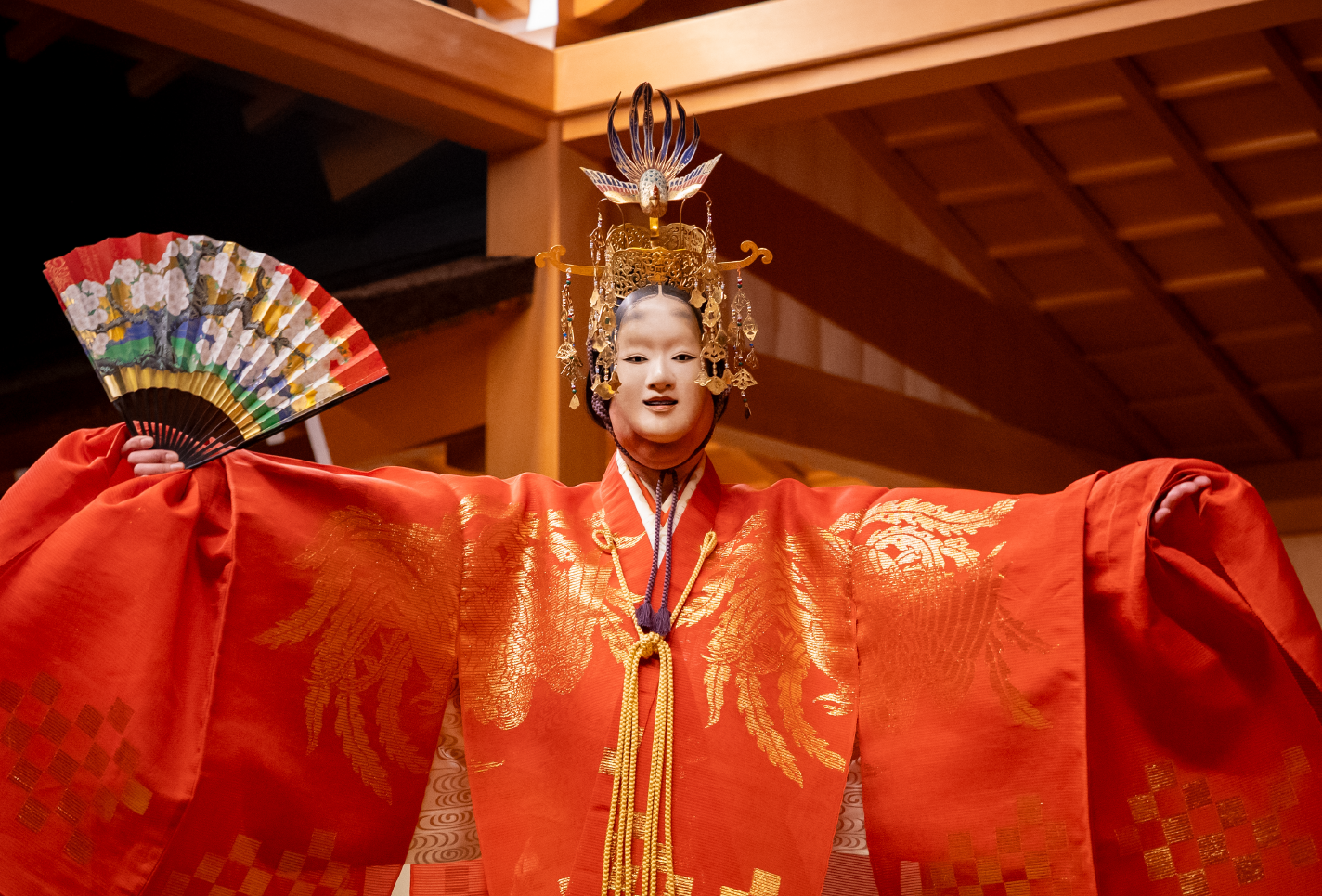
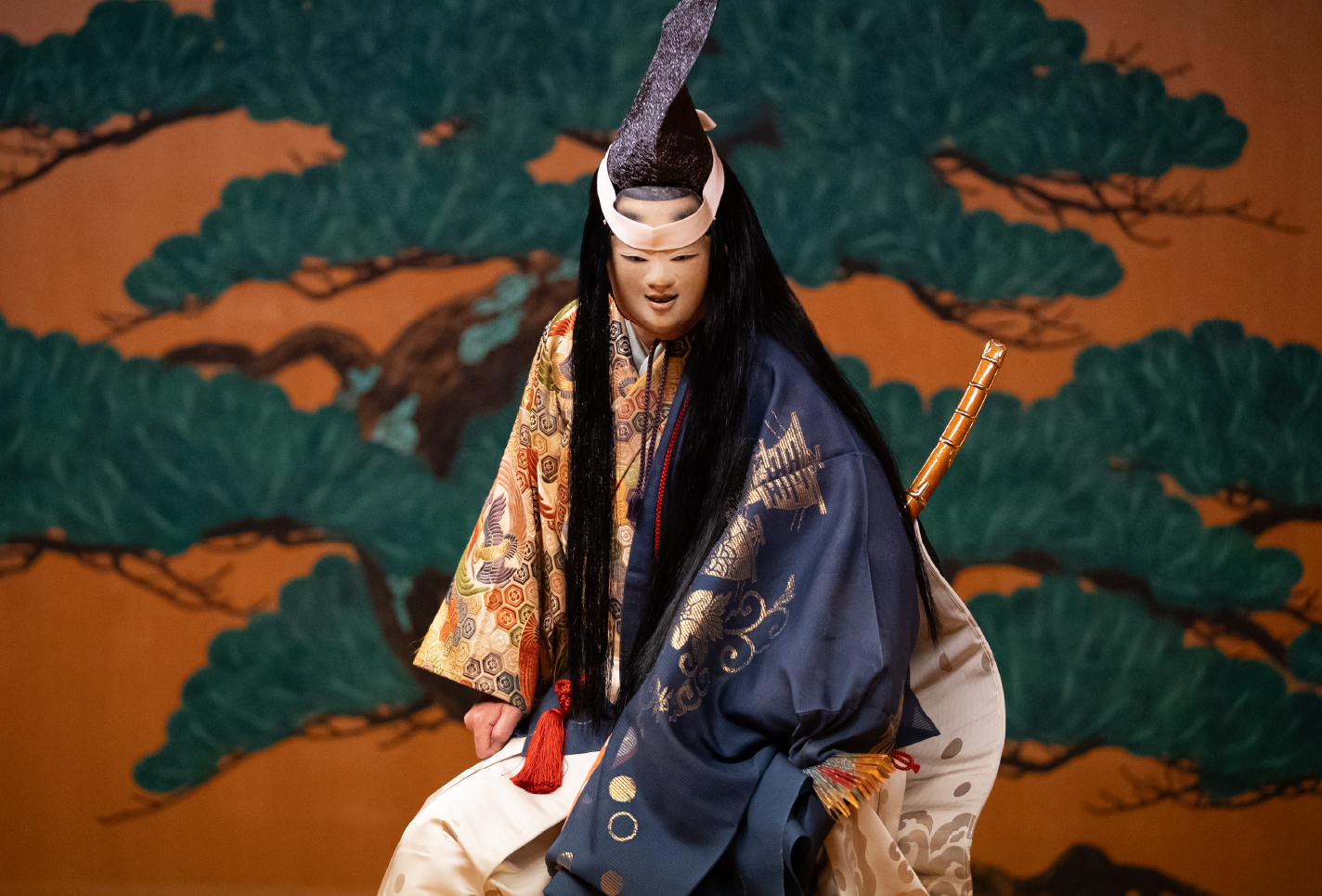
What is a Noh mask?
The origin of the mask and the emergence of the Noh mask
“Noh” has more than 600 years of history and is called the “world’s oldest performing art”.
Even today, “Noh” is still performed in the same traditional style as in the past. It is a unique mask performance with a high level of spirituality.
The “mask” is a tool for a person to transform into someone by wearing it on one’s face. When you look back at the history of the mask, you will know that it has roots in the prehistoric times.
In the Stone Age cave, there were drawings of people wearing animal masks. It might be a disguise to get close to the target for hunting. They might feel that they could acquire the ability of the animals by wearing the mask.
They might have a sense of belief in the mask that it could imbue supernatural power, such as super human strength, swiftness of foot, and floating in the air.
Since ancient times, humans have been making masks all over the world. These masks made their way to Japan, encountering various cultures and religions. They then encountered traditional Japanese masks, evolved in their own way in the Japanese climate, and came into being with Noh theater, giving rise to the Noh mask.
Beginning of Noh mask
– from divine spirit “Okina” to various masks –
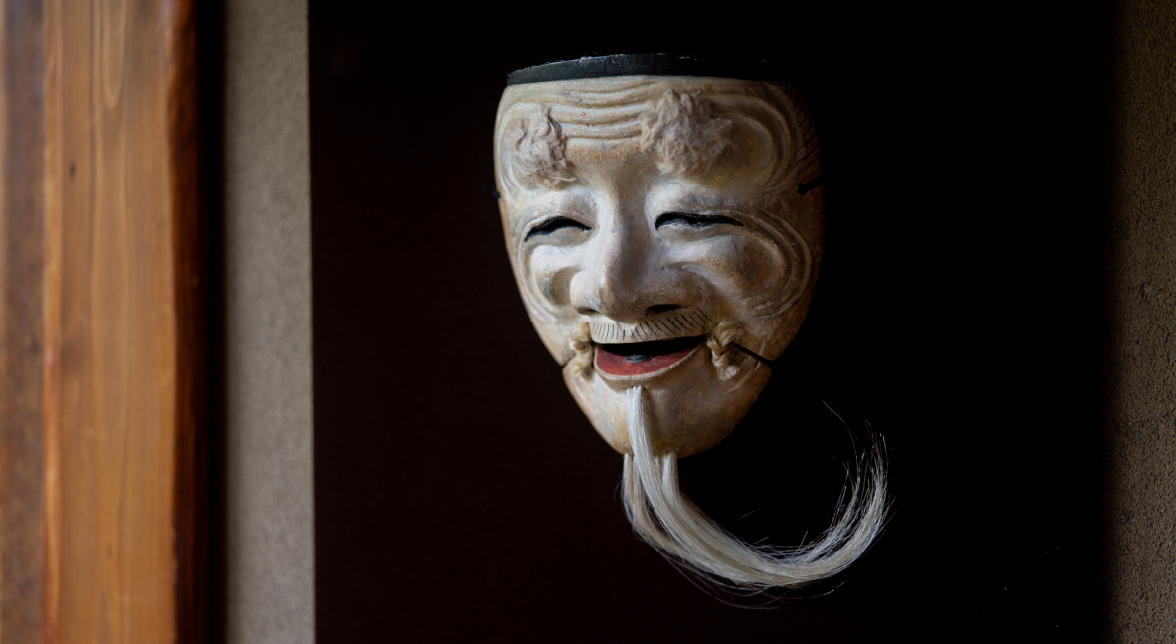
Since the beginning of Noh plays, the oldest Noh mask that is still passed on today is the mask of “Okina”. Okina is treated specially, since it is a divine spirit or the avatar of a divine spirit.
In the past, our Japanese ancestors were an agricultural society. They were afraid of nature’s “great power”, but at the same time, they found the personality in the power and called the power a “divine spirit”. As such, the story of the Noh plays in the early days were based on these religious services, hence the creation of the mask had roots in the genre of either Okina or Fierce god.
It was only later that the masks for the role of Jyo, used for male deity or female deity, were created.
Furthermore, 600 years before, it was at this time, between the end of the period of the Northern and Southern Courts and the early Muromachi period, that the great father-son duo of Noh actors Kan’ami and Zeami appeared. They let characters appear in their plays and developed Noh as an entertainment to appreciate.
Samurai and Noh
– entertainment as a salvation of souls
Noh has been developed in the support of samurai, such as Yoshimitsu Ashikaga, Nobunaga Oda and Hideyoshi Toyotomi, who served as a patron of Noh. It affects in great degree why Noh has been appreciated for more than 600 years. Daimyo (feudal lords) competed with each other to support Noh performances since it was revered as a cultural activity, in accordance with the tastes of Shogun families that supported Noh.
Why was “Noh” so close to the Samurai’s heart?
A Samurai’s occupation was to kill. They existed in a cruel situation. In order to survive themselves, they were forced to kill even their father, son and siblings. We cannot imagine how they felt after the battle, but we can assume that they might search for salvation in religion. Zen Buddhism was known to support the Bushido (Samurai) spirit, while Nembutsu Buddhism (chanting the name of Amida Buddha) was booming in the Kamakura period. Many Samurai, in the latter half of their lives, became Buddhist priests and embraced Nembutsu Buddhism, to be healed from a sense of guilt and atone for the souls of those he killed.
Looking back with these backgrounds as context, one can see that a deeper story was requested for entertainment, but it was not only amusement. One response to this request was Mugennoh, which was established by Zeami. In Zeami’s Noh play, ghosts appear repeatedly and speak about the remaining thoughts or grudges in this life and return to the other world. One of the main subjects of Noh is to call the souls of dead people, calm their anger and console their sorrow.
As the story of the Noh play deepened, more various expressions were also expected for Noh masks.
The Spirituality of Japanese in Noh masks
At the beginning of the Samurai era, the most dramatic event in Japanese history occurred. That was the rise and fall of the Heike family. There are a lot of Noh plays about the story of Heike. The family took control of political power as Samurai for the first time in Japanese history, they had a dominant influence, then they perished all at once. The story of the Heike family was nothing to compare to and impressed the people deeply.The philosophy of “All things are in flux and nothing is permanent” and “all glories must fade” are underlying in the story. This is reflected in the sense of “Monono-aware (appreciation of the fleeting nature of beauty)”, the aesthetic notion of the noblemen in the Heian period.
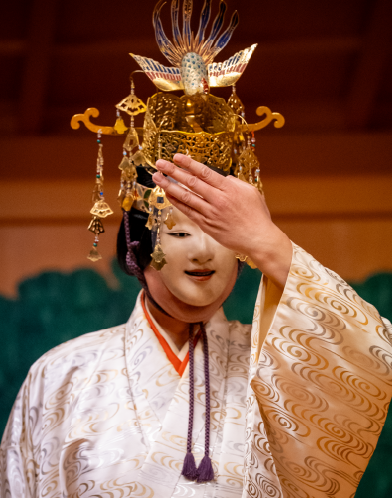
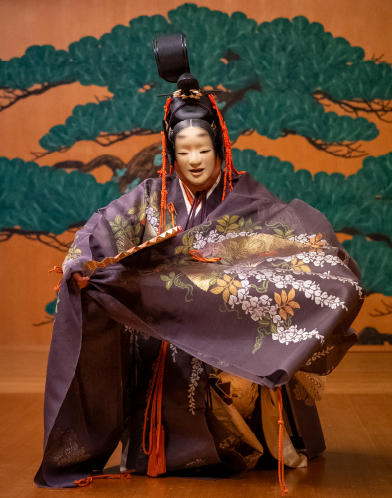
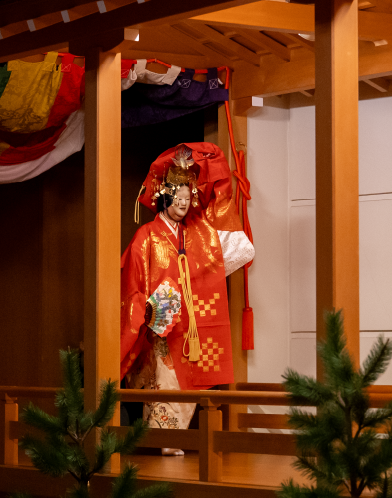
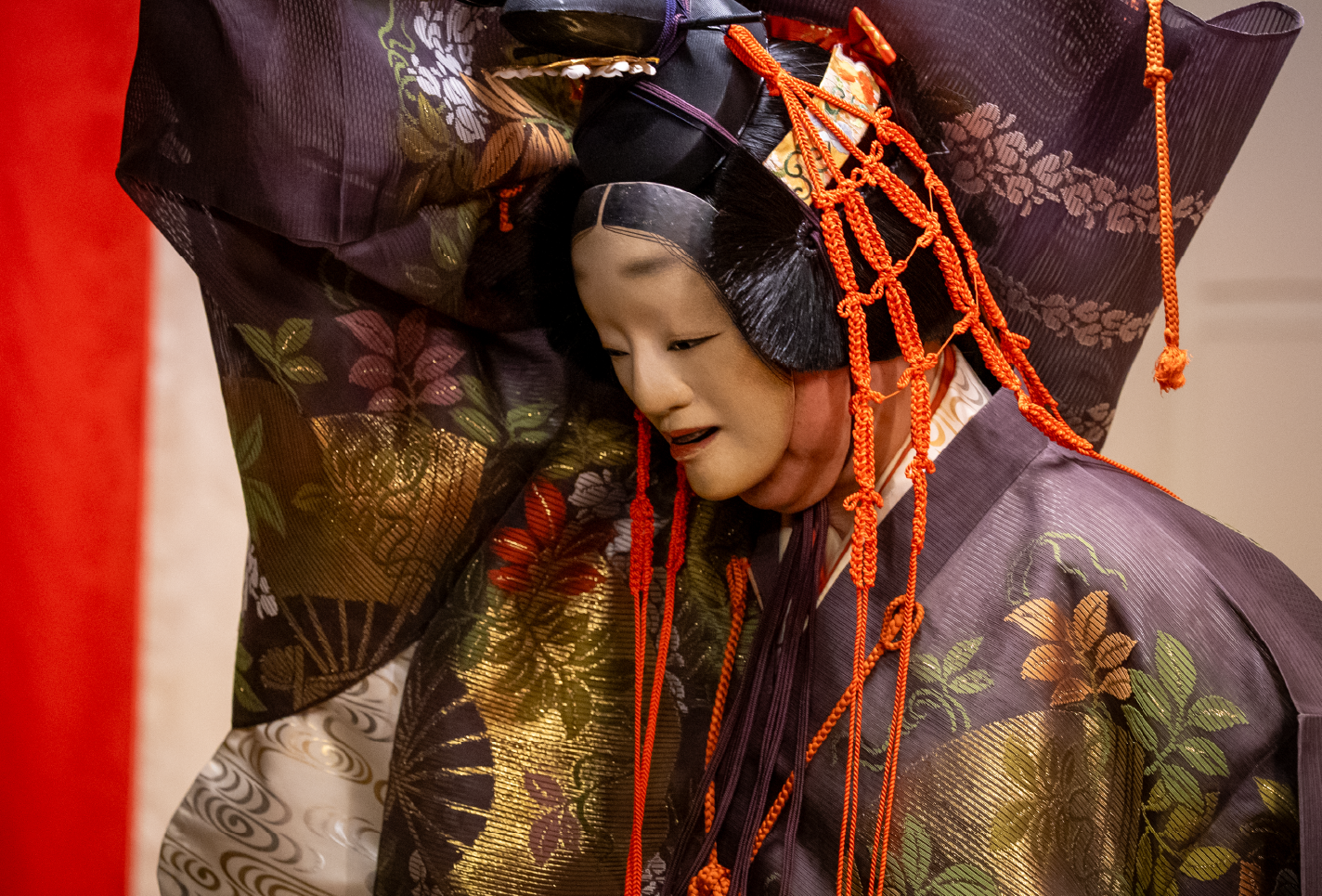
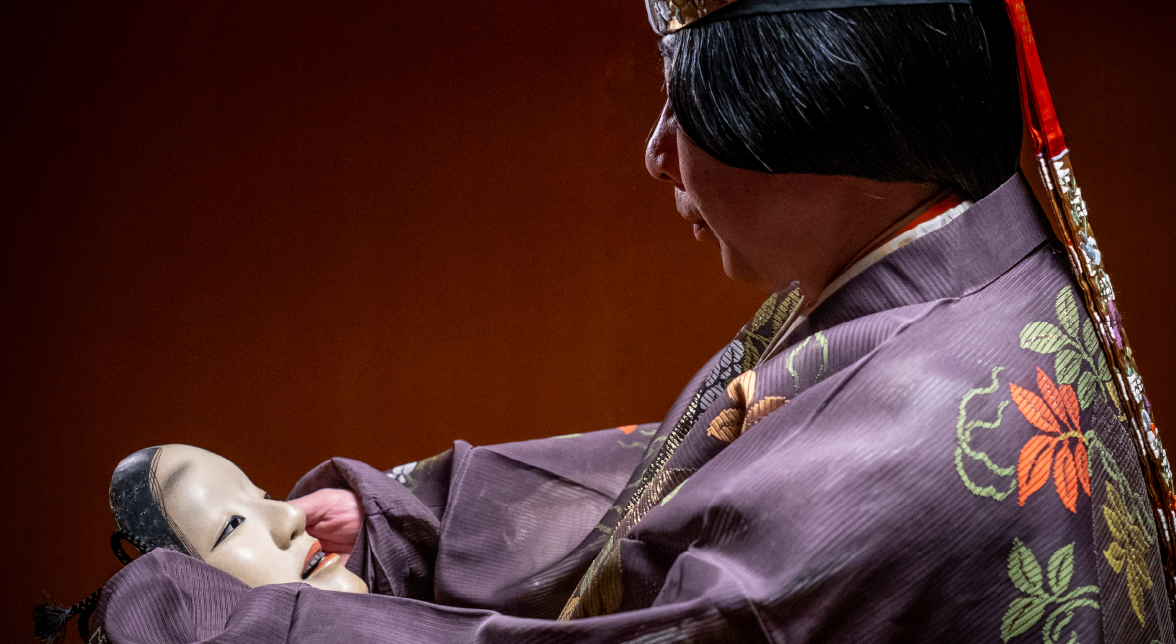
Noh masks have incorporated these Japanese philosophical aspects over 600 years into an existence that reflects all humanity around the world. All forms of human expression in the “ambiguous facial expression” of Noh masks. The Noh masks synchronize with the physical expression of actors; they change the emotions in flexible ways. Sometimes this may be harsh and other times calm. A Noh mask can express emotions that change freely. That is truly the fascination of the Noh mask.